Spaced Repetition Flashcard Import
Creating flashcards with higher engagement for Notability power users.
- Role
- Lead Product Designer
- Timeline
- May 2026 - August 2026
- Team
- Solo designer
Overview
How might Notability help its power users memorize their content better?
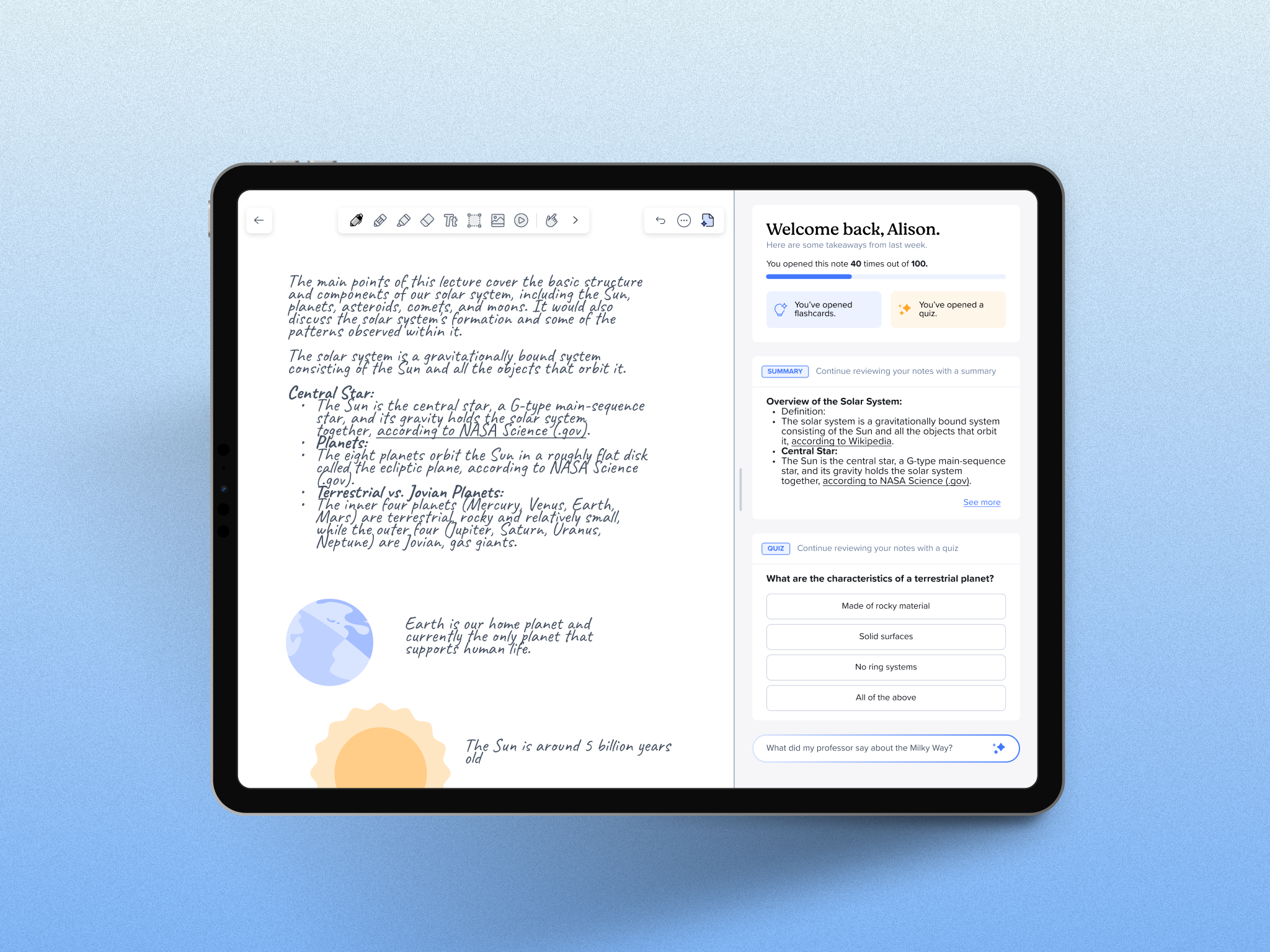 The Notability Learn experience allows users to transform their notes into Quizzes, Flashcards, and more.
Notability is an ed-tech note-taking application that has over 4 million subscribers worldwide. In 2024, they expanded into the study tool and productivity space with the AI product Notability Learn, which aims to empower students with active-recall study methods. Read more about my other work with Learn here!
Flashcards weren't being used as much as we wanted them to be.
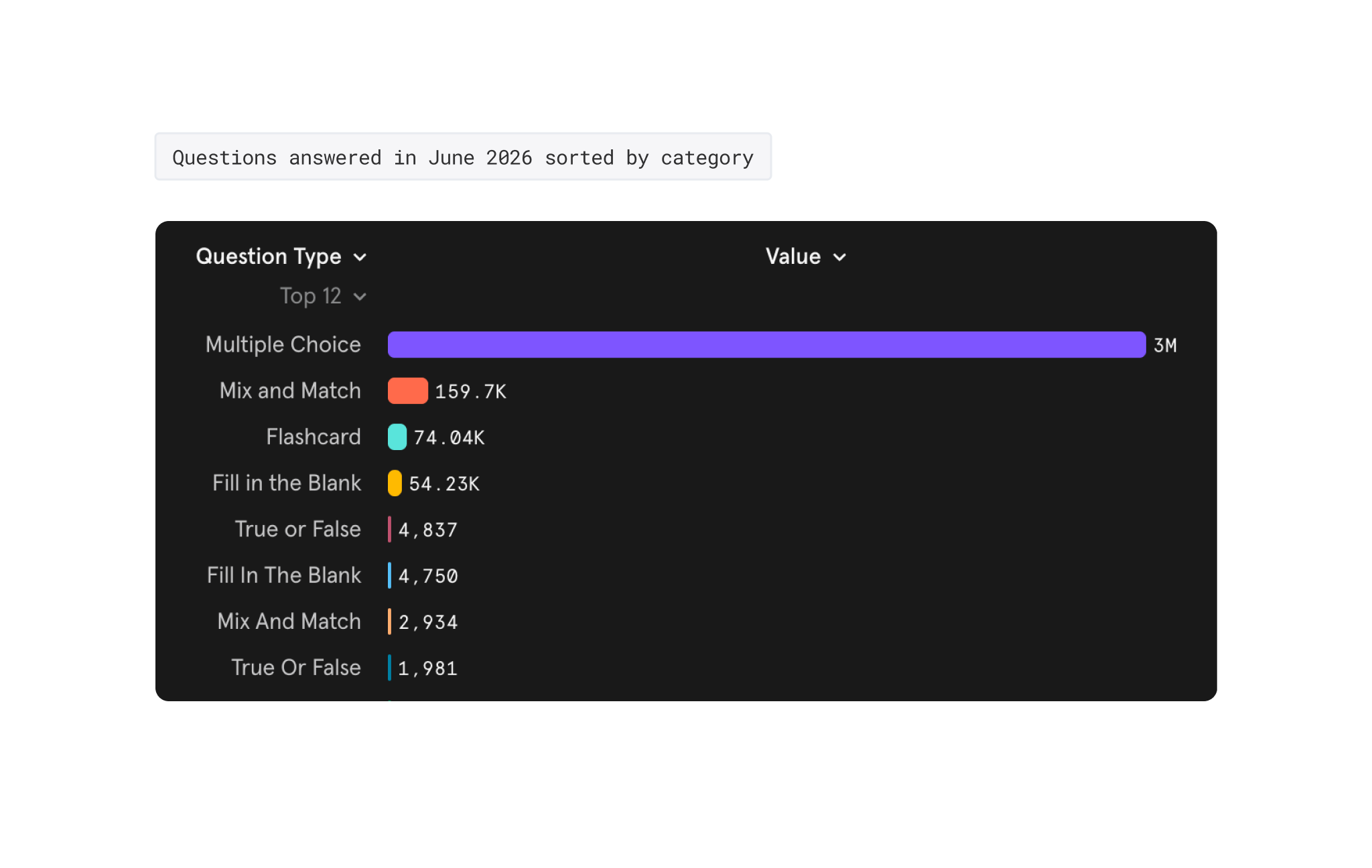 Most of our Learn question types were dominated by multiple choice and we wanted more engagement for other question choices.
Notability Learn already let students generate flashcards from their notes, but decks were something you made once and rarely returned to. At the end of 2025, Mixpanel boards showed flashcards in the third out of our Learn tool offerings (quizzes, mix-and-match cards, and AI summaries.) While Multiple Choice questions were the most used method by a wide margin, we wanted flashcards to be the second most used method, and to increase retention.
I led design for this feature from ideation to implementation.
As Lead Product Designer, I owned the effort to bring spaced repetition — the study method that schedules reviews right before you forget — into Learn, with the goal of turning flashcards from a static artifact into a recurring study habit for our power users.
The problem
The flashcards existed, but engagement dropped off after the first session.
Students would generate a deck, run through it once, and never open it again. For power users studying for real exams, that meant Learn wasn't yet part of their weekly routine.
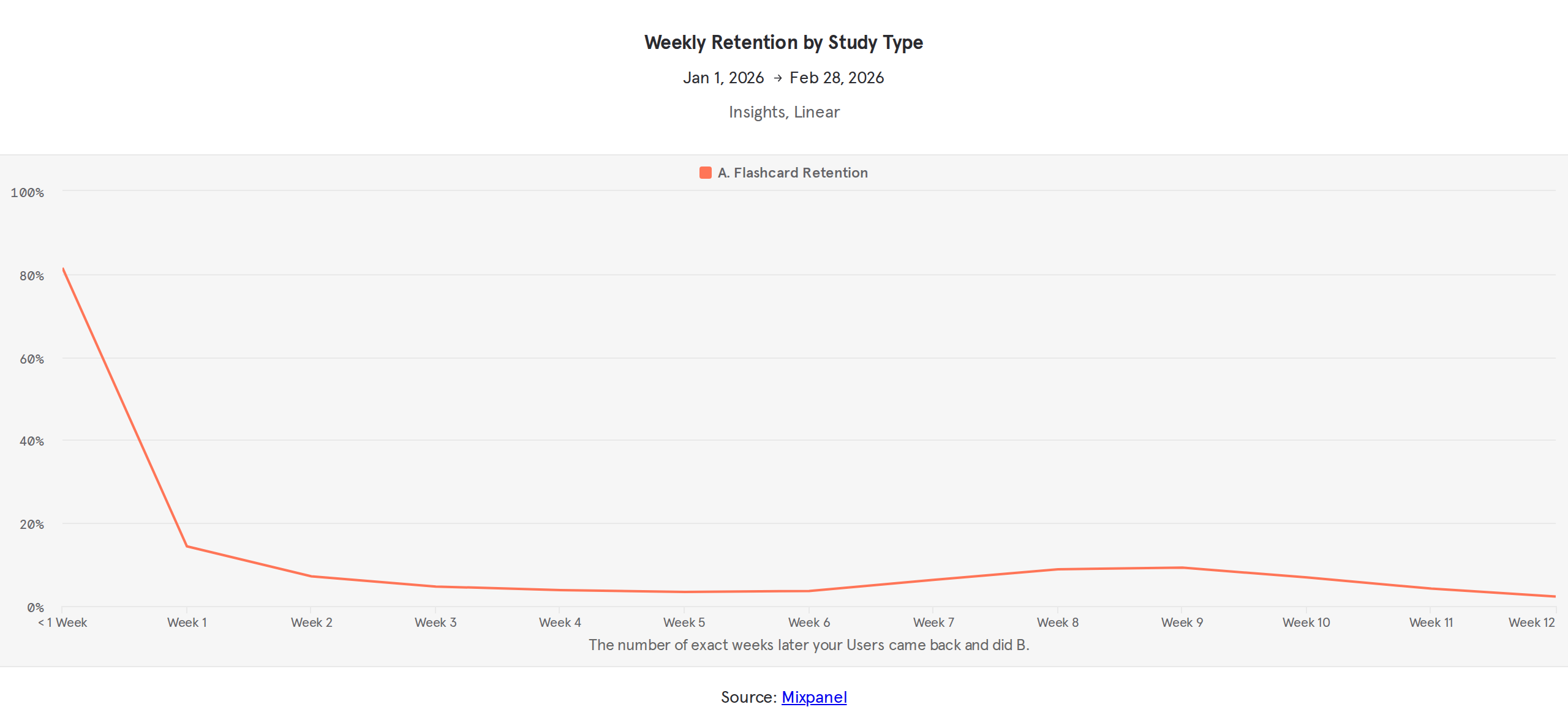 Flashcard retention typically drops off sharply after around 1 week
Users specifically wanted to use Anki-style flashcards when reviewing their decks.
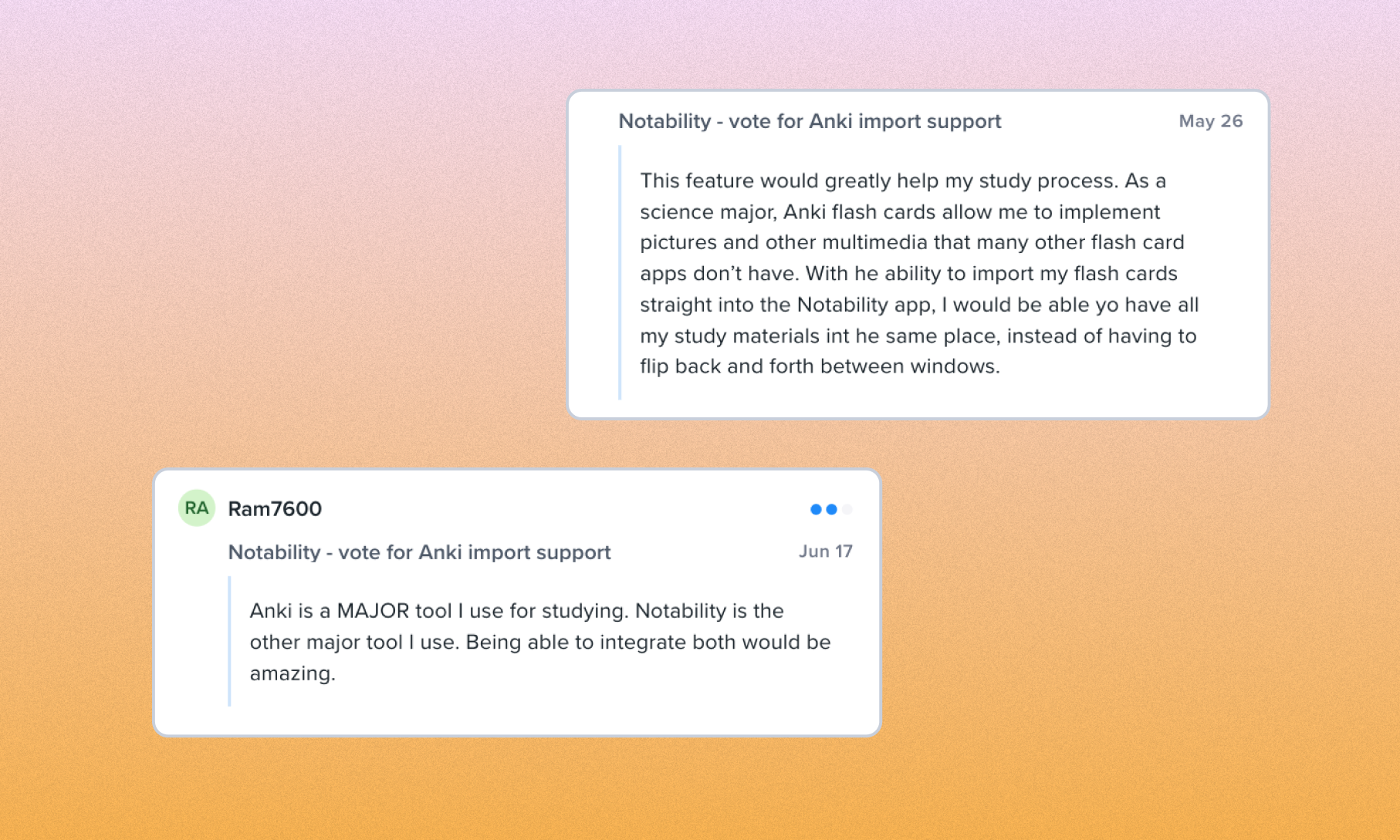
Anki is a repeated exposure/spaced repetition learning flashcard software. It uses a formula called FSRS, which is an open-source formula used by Anki where the time in between which you review cards depends on how difficult you rate the card you're reviewing. Anki is used by thousands of people all over the world and is loved by med students and law students who need rigorous systems to review material.
Goals
I set out to redesign flashcards around long-term retention rather than one-time review.
The project targeted a few key goals:
- Increase repeat engagementIncrease repeat engagement with flashcards — bring students back to their decks over days and weeks, not just once.
- Ground the experienceGround the experience in a proven learning science method (spaced repetition) so studying actually improves retention.
- Deepen valueDeepen value for power users who were more likely to make use of our highest subscription tier, Pro.
I researched how spaced repetition works in the wild and where our competitors were lacking
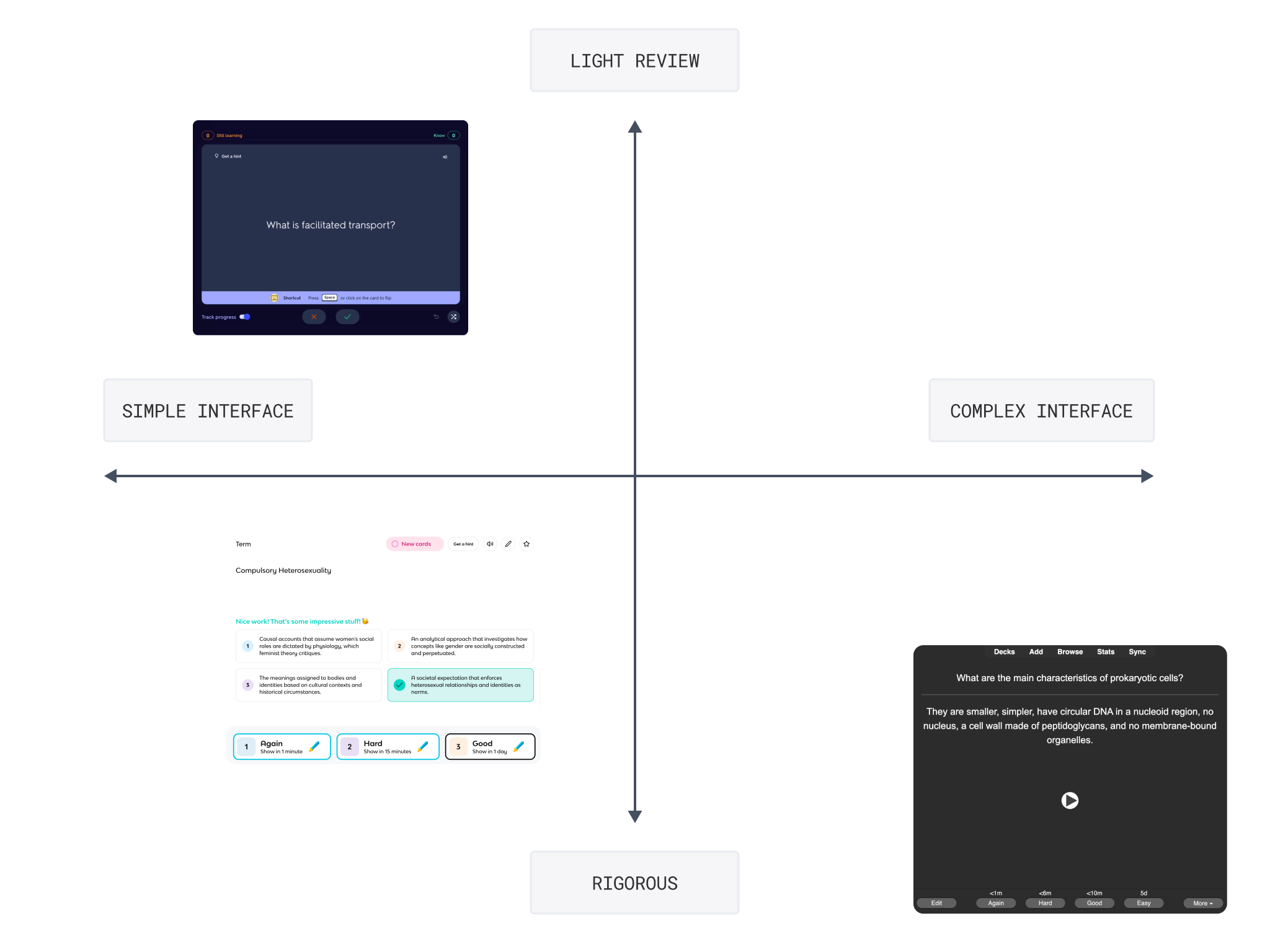 Competitors like Anki, Quizlet, and Knowt handled spaced repetition/flashcards differently, and we wanted our product to be built for semi-rigorous review while having an understandable interface.
I wanted to create an experience that was portable and both iOS and mobile friendly while maintaining the rigor and structure that Anki and FSRS styled flashcards provided.
Final flows
Easily upload text and Anki files to iOS devices.
Use spaced repetition to memorize and organize your study materials.
Impact
While flashcards is a very recent feature, we've already seen extremely promising results.
The day before our previous flashcards were deprecated, we tracked on Mixpanel that there were 800 flashcard sessions and only 50 were completed successfully in the previous week (around 6%). Comparatively, Mixpanel measured that within 5 days of initial beta release, there were 3400 spaced repetition sessions and 23% were completed successfully.
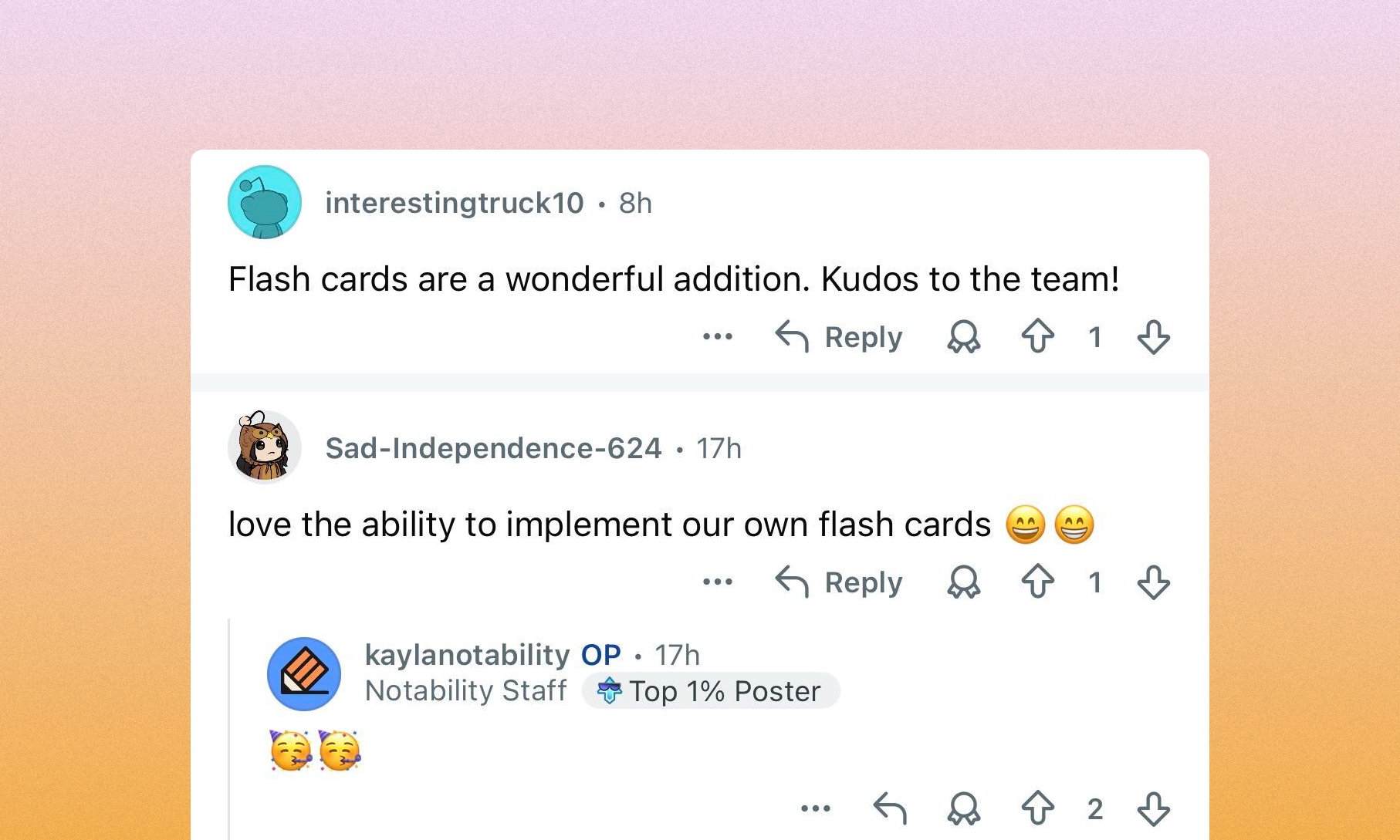 Initial reflections from our user base.
Reflections
A few lessons I learned along the way:
Designers need to truly understand the technical processes they're solving for
To truly understand users, I tested Anki flashcards for over a span of two weeks and used competitors like Quizlet and Knowt. Upon first release of our own spaced repetition version, I tested 400 flashcards to prepare for weekly trivia. Anki is an extremely complex algorithm and even as someone who wasn't involved in replicating FSRS, I made sure to understand the structure well.
Don't box yourself in
I'm used to referencing other design patterns in order to create a product that's easy to use. However, Notability breaks frontiers in many ways -- it's an iPad app, web app, and note-taking app that's expanding into the note taking space. I learned that it's okay to invent your own UI patterns and not have a reference point for everything, especially if you're trying to improve technologies for people.